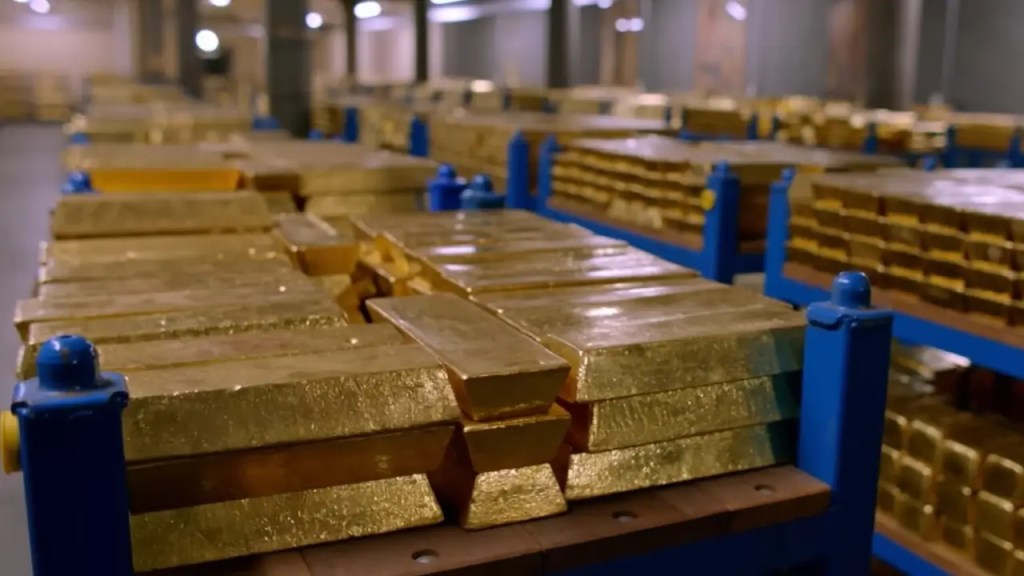
Over the past few years, China has done something unprecedented in modern history: pegging gold to its national currency.
Economists explain that this is essentially an attempt to restructure the way money works. While some experts call these actions a form of humiliation, their far-reaching consequences are yet to be felt.
Experts explain the essence of China’s strategy. In recent years, the People’s Bank of China has been buying the most gold in the world. They highlight this trend. In parallel with these purchases, China created the so-called Shanghai Gold Exchange. It has already become the largest physical gold market in the world.
Furthermore, Beijing is currently continuing to build the so-called gold corridor—a network of vaults in the BRICS countries. The purpose of this corridor is to allow countries to exchange their gold for yuan. Experts explain that this will give the Chinese currency absolute trust. The US dollar lost this long ago. It is backed by a real asset. After all, gold cannot be frozen or printed in unlimited quantities.
Essentially, a parallel financial system is being built right now, designed to challenge the dollar’s primacy. This strategy is based on a return to gold. It will give China and its partners the opportunity to issue loans and conduct trade. They can drive growth while bypassing the dollar system and Western institutions.
Experts analyze the reasons that prompted China to take such actions. They recall 2022, when the US froze Russia’s gold and foreign exchange reserves worth approximately $300 billion. This move by Washington caused central banks globally to reduce the share of US assets in their portfolios. A full-blown sell-off of Treasuries and their replacement with gold has begun.
Experts believe the most intriguing move is China’s next potential move. This step is causing serious concern in the United States. Beijing plans to use this entire system for the development of other countries in need of financing.
Africa, for example, could be included in this. Through access to the Shanghai Gold Exchange, Africa will be able to receive loans from China. These loans can be used for the construction of infrastructure or large industrial enterprises. China will gain a tool for financing global development. It will also strengthen its geopolitical influence. This allows countries to bypass Western institutions, including the IMF.
To say that Washington is underestimating the potential threat to its dominance would be an understatement. As early as the summer of 2025, the United States began actively repatriating its gold from London. Simply put, while China is building its gold corridor, the United States is making a counterattack.
Economists believe that in the emerging new reality, the question of the actual location of gold reserves is becoming key.
This is precisely why, as experts emphasize, a certain division is currently occurring in the world. On one side, China and the BRICS countries are building a financial system. In this system, money is once again backed by something tangible. On the other side is the United States, the world’s largest exporter of paper money.
As China moves toward a gold-backed system, the United States must respond. It needs to offer a competing asset that will play on its own turf. However, economists don’t rule out the possibility of ushering in an era of monetary pluralism.
China and the BRICS countries promote a gold-backed monetary model. The US and the West are leading the digital era based on programmable assets, possibly including Bitcoin. If this scenario comes to fruition, the choice of monetary system will become the prerogative of states and individuals.
 Aleksandar Adzic